
Posted in Article, Branding, Business, Colors, Corporate Communications, Design, Inspiration

Article: What Your Brand Colors Say.

Did you know, that colors have a voice of their own and they speak in diverse tones?

When it comes to colors, many people are usually inclined to choosing something they like or are comfortable with, like their favorite colors.

However, when it comes to branding for business and choosing colors for your brand identities, designs and print materials, there are certain principles that should be taken into consideration to reflect an organized entity and professionalism as a business.

This is because colors have over the years been associated with certain interpretations and meanings and there are also some rules pertaining to color application. These need to be considered, for a brand to be well positioned, attractive and still reflect its brand’s values.

Let’s begin with the basic things, we think you should know about colors.


The Color Wheel

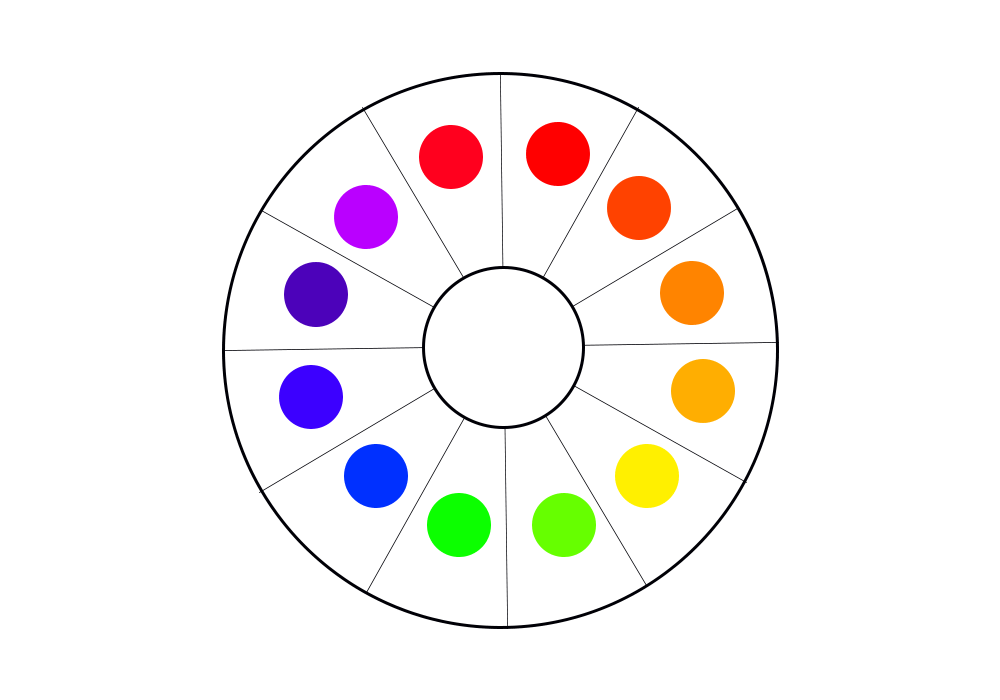
The color wheel reflects the primary colors (any color that cannot be made from the combination of other colors), the secondary colors (colors derived from mixing two primary colors or additive primary colors in equal proportions) and tertiary colors (colors derived from the combination of a primary and secondary color in equal proportions).

The color wheel is the foundation of any brand’s color application for design, as well as its brand identity and colors choice; whether you choose to make use of primary, secondary or tertiary colors or other colors that can be derived from the combination of any of these three.
This Includes the use more or less saturation (lightness, with the combination of the white hue and any other color) or more of less value (darkness, with the combination of the black hue and any other color).

Your choice of colors should reflect your brand’s values and the kind of image it intends to project to its target audience.

This is why certain well-known global brands, as well as smaller brand have over time selected specific colors for their brand identity.
As we go through the meaning of some predominant colors, think of well-known brands and why they may have selected certain colors to represent their business.

Below are summaries of some of the most principal colors and their meanings.

The Primary Colors

Red, know to reflect: Passion, energy, love, romance, danger, style, excitement, pain, bravery, active, bold, power, ambition, youthfulness and assertiveness.

Yellow, know to reflect: Joy, cheerfulness, friendliness, intellect, energy, warmth, caution, optimism, understanding and smartness.

Blue, known to reflect: Stability, leadership, trust, responsible, truth, confidence, calmness, tranquility, affection, success, loyalty, authority, peace and sincerity.

The Secondary Colors

Orange, known to reflect: Creativity, productivity, thoughtfulness, warmth, instinct, freedom, impulse, motivation and new ideas.

Green, known to reflect: Growth, clarity, generosity, freshness, life, money, safety, healing, environment, hope, youth and nature.

Purple, know to reflect: Vision, royalty, diplomacy, fashion, dignity, passion, spirituality, luxury, wisdom, magic, plentiful and loyalty.

Other Dominant Colors

Black, known to reflect: Sophistication, power, mystery, death, grief, strength, finesse, subtlety and infinity.

White, known to reflect: Purity, cleanliness, peace, goodness, simplicity, hope, freshness, light and coolness.

Gold, known to reflect: Supremacy, royalty, creativity, warmth, loyalty, friendliness, loyalty and strength.

Silver, known to reflect: stability, authority, security, strength of character and maturity.


Color Use and Branding
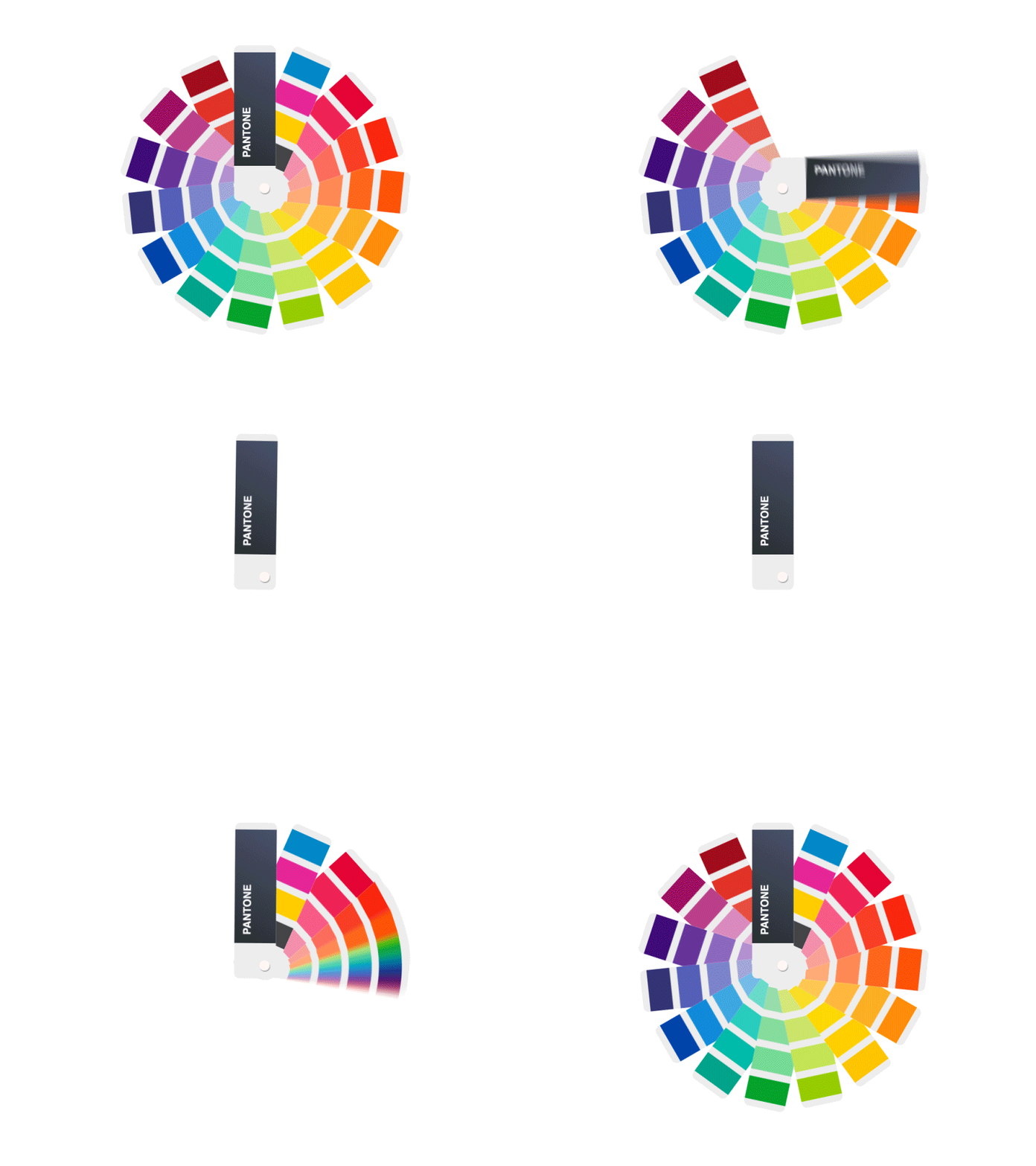
After examining all of these colors and some of their generally acceptable meanings. You may be very tempted to make use of a lot of them for your brand representation. This is quite understandable, since many of them reflect some very good and desirable qualities and values.

However, this is not always the smartest route, especially when choosing colors that would in the long run reflect your brand’s values, style, creativity and organization.

Your vision and mission statement for your brand, as well as service offerings should be carefully considered before the choice of brand colors are made, such that your color choices remain pleasing to the eyes and reflect balance.

Below are some formulas that can help you decide on how you could combine certain colors, taking into consideration the color theory rules and application.


The Monochromatic Formula

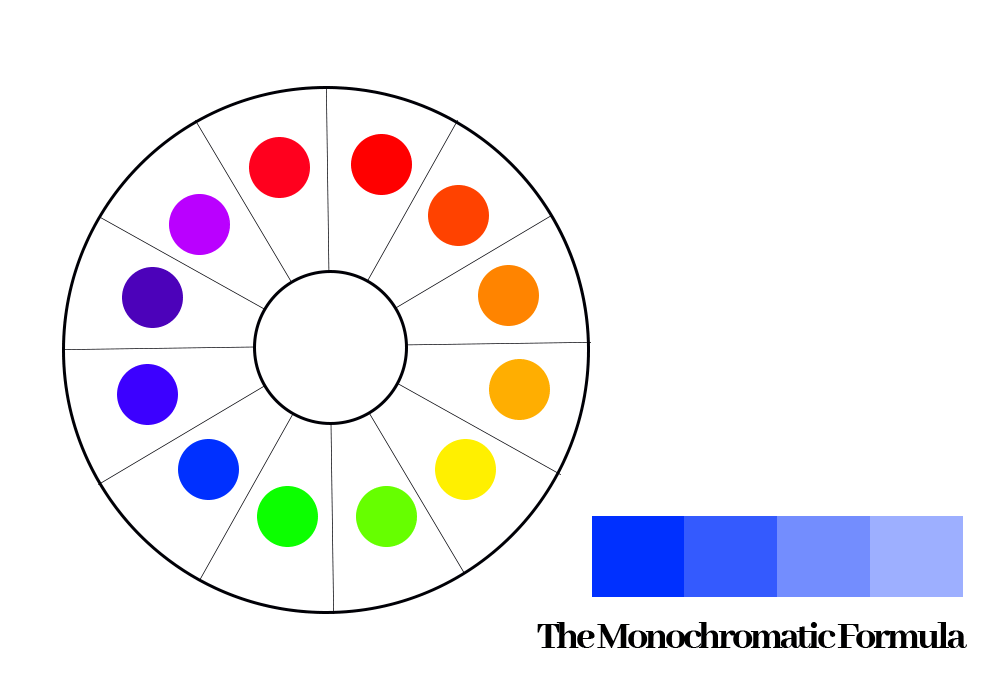
This entails that the application of a single hue from the color wheel, with the combination of more or less saturation or value. Say you picked a blue hue.
You would eventually have a variety of that specific shade of blue to be applied consistently across your brand identity, designs and brand assets.

Think of brands you know that may have applied this concept, that would help with more insight.
See the image sample below for better understanding.

The Analogous Formula

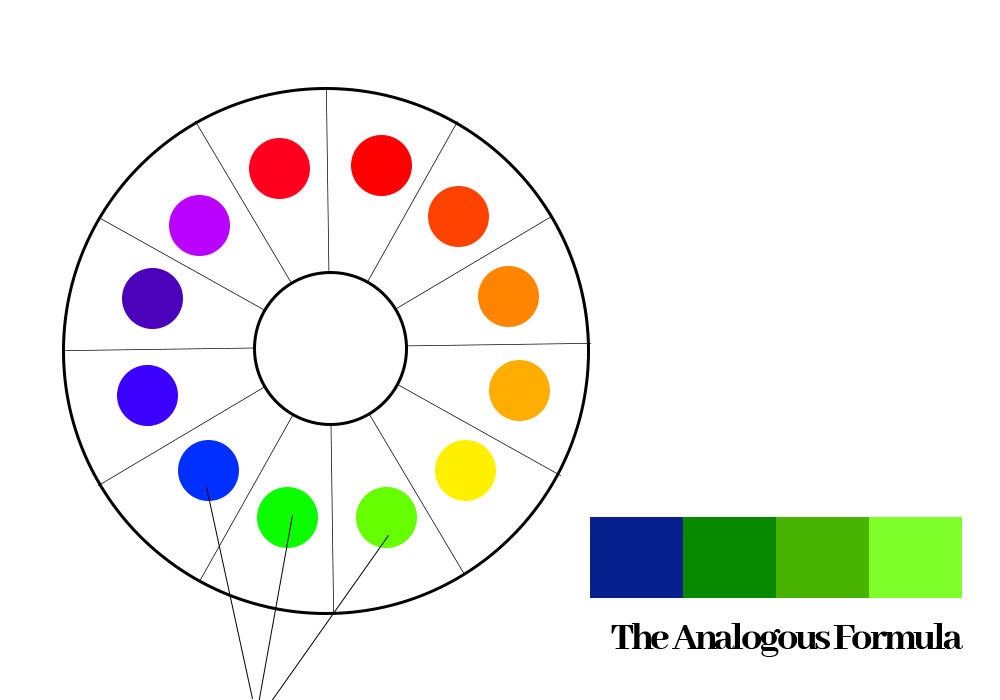
This entails the application of three hues that appear next to each other on the color wheel, with the combination of more or less saturation or value of any of these hues selected.
This gives your brand a lot of creative room for color application and use for your brand identity, designs and brand assets.

Think of brands you know that may have applied this concept, that would help with more insight.
See the image sample below for better understanding.

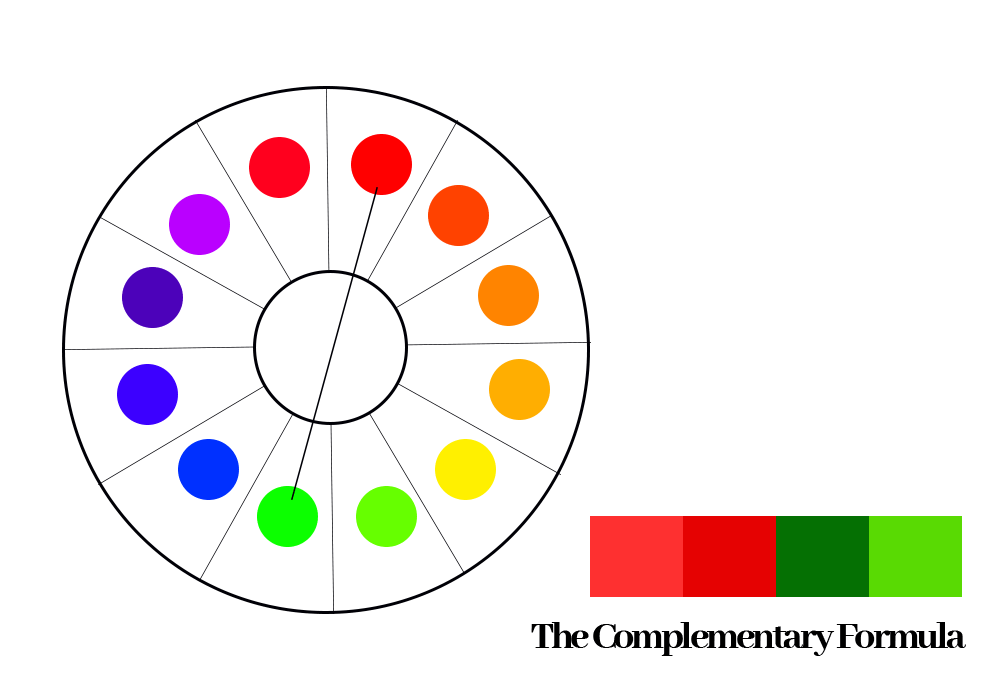
The Complementary Formula

This entails the application of any two colors directly opposite each other on the color wheel with the combination of more or less saturation or value. Say you picked a red hue, the complimentary color for this hue on the color wheel will be the green hue.

You could decide to apply these two selected complementary colors using a specific saturation or value consistently across your brand identity, designs and brand assets.

Think of brands you know that may have applied this concept, that would help with more insight.
See image sample below for better understanding.

The Split Complementary Formula

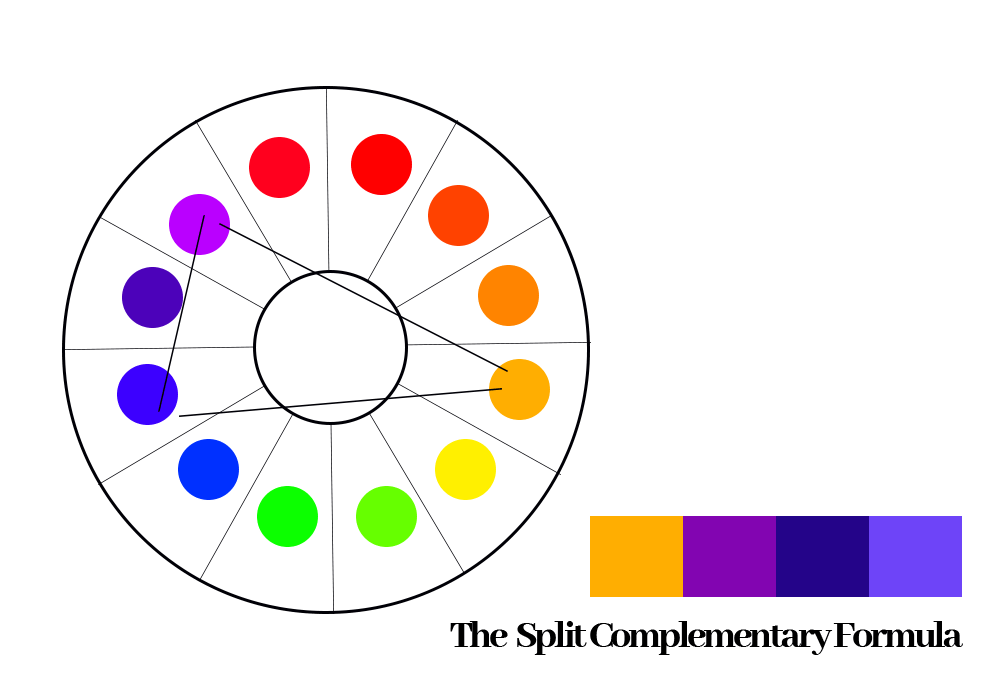
This entails the application of any hue on the wheel and two opposite colors to it on the color wheel, with the combination of more or less saturation or value.
Say you picked the orange hue on the color wheel. The split complementary colors for orange would be the green and blue hues.

You could choose to apply these three selected hues using a specific saturation or value consistently across your brand elements, designs and brand assets.

Think of brands you know that may have applied this concept. This should help with more insight and creativity.
See image sample below for better understanding.

The Triadic Formula

This entails the application of any three (3) equally spaced hues from the color wheel, using a triangular method of selection (an equilateral triangle).

This can be a very dicey method of color application, however care must be taken to ensure that the three selections are not hard to the eyes and remain balanced.

This can be achieved by applying more or less saturation or value to the three selected colors.
Think of brands you know that may have applied this concept. This should help with more insight and creativity.

See image sample below for better understanding.


The Tetradic Formula

This entails the application of any four (4) hues from the color wheel, using a rectangular method of selection.

This also has to be selected carefully using a suitable saturation or value of the selected hues and applied across the brand identities, designs and brand assets.

Think of brands you know that may have applied this concept. This should help with more insight and creativity.
See image sample below for better understanding.


Conclusion

Even though these are great formulas that can be followed when creating designs for your brand’s assets or designing in general.

Don’t be afraid to think outside the box or try something new or unique.

Remember, there is beauty in moderation and balance, but there is also a beauty that comes with variety. As long as your choice of colors are balanced and have great contrast, without being hard to the eyes. This ensures that such designs or branding efforts remain attractive, irrespective of your colors choices.

Don’t also be skeptical about nature’s inspirations.
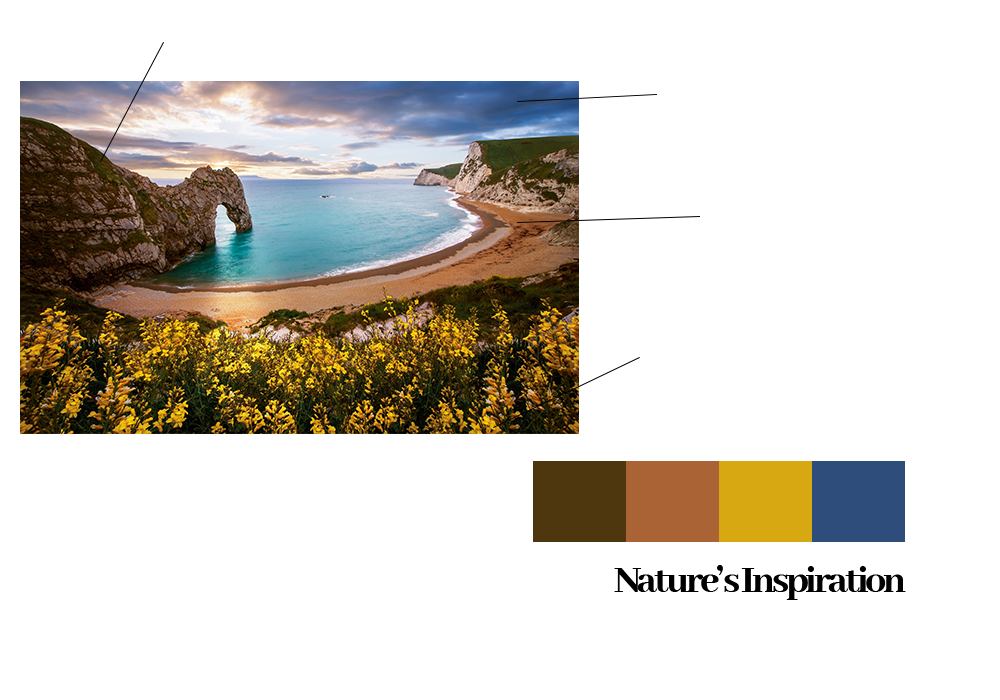
Some of the best designs and color combinations of all time for some brands have been obtained from the natural things around us.

Also remember to generously make use of neutral colors: white, black and grey (using a saturation or value of hue that comes off as most suitable for each design) to bring balance to your all of your branding and design efforts.

We hope all of these information remains helpful in making concrete decisions about your choice of brand colors for your brand identity and design efforts.


Article by Opeolu Adeyemi.
Corporate Communications and Public Relations Consultant
Founder, Brave Publicity Ink!

Posted in Article, Autobiography, Boss Shoes, Business, Career, Entrepreneurship, Risk, Startups, Women

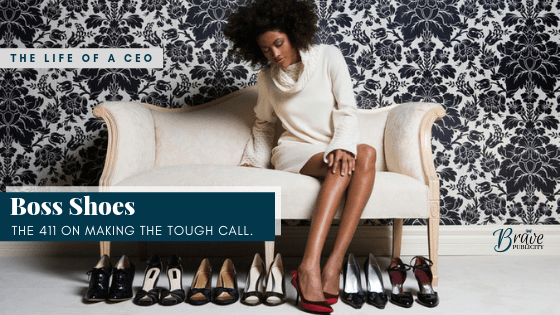
Boss Shoes – The 411 on Making the Tough Call.

So, beginning a journey into the “Boss” life isn’t something anyone just plunges into.
There is always a back story to such a decision and it can be one of the most defining stages of a person’s life.
I for one never really thought about starting something from scratch, at least not seriously and at an early stage.

Most folks would rather work for a few years, gain some momentum in the corporate world, form strong alliances, contribute some value to organizations they have an interest in, make some money and save up for resources before starting out on their own.

I could say I have done that, at least partially (maybe way too early before I was even officially a graduate) and continue to do so (save for the part of making and saving some money).

So, what made me take the entrepreneurial plunge?

Well, I think lots of reasons lead to this decision.
Now, there is a world of difference between what I studied as a Bachelor’s degree and what I currently do, but I will say my pro-bono services lead to wanting more growth and understanding to function and serve better.

I like to do excellent work and when one receives an appointment from an Alma Mater you’ve had a good track record with, it is difficult to take such a responsibility for granted.

Now, there is a world of difference between what I studied as a Bachelor’s degree and what I currently do, but I will say my pro-bono services led to wanting more growth and understanding to function and serve better.

I like to do excellent work and when one receives an appointment from an Alma Mater you’ve had a good track record with, you probably won’t take such a responsibility for granted.


So, I began to research and learn more and soon found this field to be quite interesting.
I leveraged on the first flexible year after college to take an online course that helped me better understand my role. It also led to narrowing down my job applications to specific roles.

I learnt much working for a year with two different organizations and was stretched to the limit (maybe not the limit, but stretched thinly).

Mostly because of the kind of ethics and work culture in this part of the world, many organizations tend to take advantage of employees and sometimes back them into corners. Loading up more and more responsibilities beyond their job descriptions, as was the case for me.

I think this is so because the market place has a big pool of people constantly in search of jobs, so employees are often treated badly by companies with a poor mindset, reflected in statements like, “after all, someone out there is looking for this very job you have”.

A bad mindset and thought pattern, I know.
I think many employees have somehow evolved to become insensitive to the needs of the people they bring aboard their organizations.

I honestly don’t think they set out to be this way or desire to run their companies in such a manner, but experiences (especially bad experiences) change people in leadership.

Things can definitely spin out of control in the work place if bosses do not handle some things carefully and intelligently.

I on the other hand persevered for a while, but when the work experience began to affect my health, mental well-being, my earnings and even my pro-bono services (which were beginning to experience a decline in performance), I knew it was time to go.
So, I quit.
After giving a full month’s notice.

There wasn’t much to look forward to anyway, after all, everyone I had met on my first day had either quit or had been fired and every one I was leaving behind was completely new.
Sad, but somehow, I felt more relieved and at peace with my decision.


So, doing nothing for a while got me thinking, especially with no call back on new job applications.
The ones who did call offered much less pay for more work.

I recall praying a lot to God about things as I thought to myself, what can I do with the skills I currently have?
I couldn’t have had lots of early work experiences for nothing, right?
Or a great result and degree for nothing, right?

So, I did a lot of self-examination about my skill sets, my areas of passion, things that made me restless and I even revisited those childhood dreams I had, even those I used to joke about.

With lots of guidance from God, business conferences and a church conference (one I’ll always remember as long as I live).

I was able to create a business plan, looking beyond my immediate circumstance to what could be.

Not that I had all the resources.
As a matter of fact, I think everything seemed to work against what I had envisioned, my only laptop broke down, relationships that were dear to me went south, everything seemed to go so wrong.
You could say, all hell broke loose.

It was especially hard since I was a long distance away from the comfort of home.
I couldn’t even tell my parents, my mum would only worry and I might have been forced into getting a Job I really had no passion for, maybe a steady one though.

However, deep in my heart, I knew I needed to acquire the relevant skills to succeed in the responsibilities I had and going back home was not an option.
I remember feeling very sad and broken. Lost and quite tired often, but I knew I could not give up.
I learnt to take each day at a time, being content with little, but fanning the flames of the dreams in my heart.

I still made job applications, but got nothing, even though my work experience and academic performance in college was quite outstanding.
However, my next job break would come soon from a very kind stranger at a business conference, one I reluctantly attended, as I was running out of financial resources.

So, when I got the job, I thought to myself, I’ll build this dream along side my steady work. Alas, this was not to be!


I soon found myself working long hours every day and weekends (count Sundays), experiencing long salary delays each month, losing sleep, but pouring in more work everyday round the clock, to say the least.
It soon became another terrible experience.

For someone who depended solely on her earnings and was also a long way from home, it was a hard place to be repeatedly.
I enjoyed my work, but knew I couldn’t stay, especially when I saw no prospects of growth and advancement after much efforts and investment made.

After being patient and persevering, I gave a month’s notice that brought with it a whole month’s work of campaigns that would run after I left. A bad deal yes, but for one who is grounded in doing the right thing always, I knew it was the right way to end my time there.
So once again, I walked away.

It took me some weeks to get back to a normal routine and sleep pattern without waking up early in a state of panic about work that needed to be done, as used to be the case.

So, I went back to my drawing board and decided to just focus, learn and set in place the solid structures required for my Consulting Company, Brave Publicity Ink.

Have I arrived? No.
I’m still on my way.
Do I have all the answers yet? No.

My journey is still rolling out in its early stages, but I’m willing to try my very best, put myself out there and grow something that would one day become a legacy.
A brand that would help, inspire, motivate and empower other people.
A brand that would make the world a better place.

Is “The Life of a CEO” a journey for everyone?
I don’t know.

All I know is, life is full of uncertainties and risks.

We’ve all got to make some hard decisions at different points in our lives, taking calculated risks to move forward, especially if you have a deep desire to make a difference and it remains a burning passion in your heart that you can’t shake off.

You can’t afford to sit back and mope around about how difficult things are when life throws you lemons and rocks. You’ve got to push.
Even when you feel like you’re breaking. You won’t.
You’ll be alright, eventually.


I’m a firm believer in God and my relationship with Jesus Christ is what has helped me weather the difficult times in my life and journey so far.

I know God never leaves us to hang dry, if we will choose to walk with Him and do things honestly and with integrity, even in the hard times.
I believe there is always something you have within you or around you that can make a difference, especially if you are thinking of taking the plunge too.

So, this is my journey so far.
I’m taking things one day at a time, one step at a time and celebrating the small wins, even as I get comfortable in these “Boss Shoes”.


Article by Opeolu Adeyemi.
Corporate Communications and Public Relations Consultant
Founder, Brave Publicity Ink!