
Introduction
In 2020, Nigeria was named home to the ‘largest’ music industry in Africa and undoubtedly continues to gain local and global attention; due to numerous internationally award-winning musicians, artists, managers, producers, promoters, record labels, marketers, and distributors.
This global attention also extends to international recognition, comprising innumerable international performances and collaborations with renowned foreign artists and record labels.
Background
The Nigerian music industry has birthed several genres of music with a hearty mixture of hip-hop, R&B, reggae, and gospel as it continues to flourish in the spotlights; as a result, one might be curious about what the financial and economic implications are for these artists and Nigeria as a whole.
According to Statista Research Department[1], This industry’s revenue grew from 26 million U.S. dollars in 2014 to 34million U.S. dollars in 2018 and is estimated to generate about 44million U.S. dollars by 2023.
This contributes a tremendous amount to Nigeria’s GDP[2], which was 448.1 billion U.S dollars in 2019 only.
For this article, we would be considering the importance of protecting the Intellectual Property Rights (IPR) [3] of creatives in the Nigerian music industry.
Further considering how profitable this industry currently is, one would envisage that ‘top’ safety measures are put in place to secure the intellectual properties of these creatives from infringement both locally and internationally.
One would expect that these creatives fully profit from their works without undue hindrance.
However, that is not the case as there is an unusual norm that plagues both the upcoming and the ‘biggest’ artists in the Nigerian music industry. There is an inability to protect IPR from infringement.
CASE STUDY
According to Celebrity Net Worth[4] Wizkid is a Top Nigerian singer, performer, and songwriter who has a net worth of 4 million U.S. dollars. He is widely recognized across Africa and in the Afrobeat community, reaching international prominence by collaborating with famous persons in the music industry such as Drake, Beyoncé, Tyga, Swae Lee, and Major Lazer to name a few. After working with other high-profile musicians, Wizkid branched out into the mainstream music scene. Being the first Nigerian citizen to amass 1 million followers on Twitter; He is undoubtedly one of the most famous Nigerians of all time.
Wizkid V. Wisekid
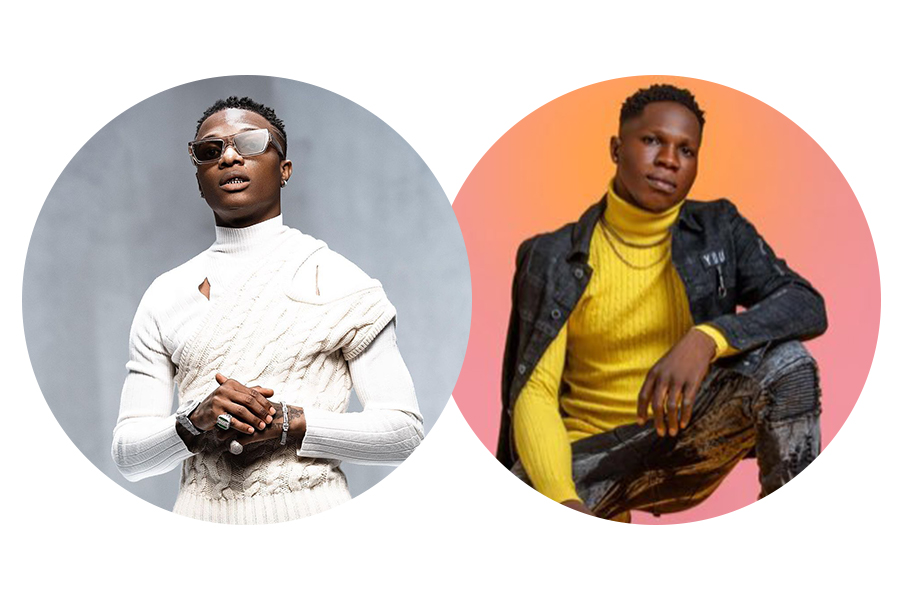
A Wizkid imposter ‘Wisekid’ set up to illegally profit from copying Wizkid on the digital space. ‘Hosea Yohanna’[5] an upcoming Nigerian artist; acquired millions of streams in just 7 months, starting from October 2020 by cloning Wizkid’s ‘Made in Lagos’ album with his album named ‘Lasgidi Made’ having 9.3 million plays and 1.2 thousand purchases on Apple music alone.
The similarities of both names were unmistakable, and though the album songs had different lineups, all Names were the same. Even the songs sounded similar. Wisekid also went ahead to create a clone Twitter and Instagram account with the handle ‘@wisekidaya’ which was indisputably made to look just like Wizkid’s handle ‘@wizkidayo’ for both accounts having a following of over 8.4 million on Twitter and 12.1 million on Instagram.
Wisekid was discovered sometime in early April 2021 by Wizkid fans when he posted screenshots of his Lasgidi Made album streams on his Twitter page captioned ‘on God’, stirring up so much controversy. After ‘@africafactzone’ on Twitter reported that he was making 30 million Naira monthly, which amounts to about 79 thousand U.S. dollars from copying Wizkid.
Wisekid replied to that tweet stating, “…I’m just an upcoming artist, I know nothing about this…”
He also tweeted that ‘Freeme Digital’ distributed all his songs and said that he had no idea, ‘Freeme Digital’, however, stated that although they distributed his old songs, the album Lasgidi Made was never one of them.
Although Wizkid did not respond to the social media frenzy, one of his managers ‘Jada Pollock’ shared on her Twitter that the Radio Corporation of America (RCA) had begun working on taking down the album. Lasgidi Made was taken off of Apple Music, Amazon, and Spotify. Consequently, the wisekids Twitter account got suspended.
Akinyemi[6] Opined that ‘Wizkid’ had become a trademark attached to the person ‘Ayo Balogun’, his public ‘goodwill’ building for over 10years. Therefore such ‘goodwill’ is attached to the name Wizkid. He explained; that the trademark was associated with a certain level of excellence. Hence, whatever bears such a mark would attract the loyal audience of the brand who associate it with excellence and cause them to consume its products.
Consequently, if unauthorized persons benefit from the name Wizkid by exploiting or posing as though such a name belongs to them, the person named ‘Ayo Balogun’ the owner of the registered Copyright and Trademark to that name, has the right to bring legal actions against such individuals.
The Benefits of Protecting Intellectual Property Rights[7]
- Protects it against infringement by others and ultimately defends in the courts your sole right to use, make, sell, reproduce or import it.
- It stops others from using, making, selling, reproducing, or importing it’ without your permission.
- It earns you royalties by licensing it.
- It may be exploited by way of strategic alliances.
- You can make money by selling it.
A farmer, who owns farmland with cattle and cash crops before he starts farming, puts up a fence around his property to protect it. That, in turn, prevents his cattle from straying and also discourages persons from trespassing. The farmer protects his farm and yields a lot of profit in return. Such a farmer experiences little or no loss in his business.
Similarly, if a person would put a fence around his physical property to protect it, what stops an artist from putting measures in place to protect his intellectual property(IP) of great value? Could it be due to the extreme intangible nature of IP; that he does not know how to protect it? Or has he refused to do so for other reasons?
Reasons Why Creatives Do Not Protect Their Intellectual Properties

There are hosts of reasons why creatives do not protect their IP. These reasons narrowed to a few such as;
- Lack of awareness.
- Attempting to do it yourself (DIY).
- Refusal to seek professional assistance (or simply believing that it is not necessary).
- Financial concerns.
- The “Till I’m big” Mindset.
Reasons as these often pose ‘major’ threats to IP growth and development in the Nigerian music industry.
Nevertheless, there are ways in which one can protect their IP rights.
How To Protect The IP Rights of Creatives in the Music Industry
Akinyemi Ayinoluwa, a Music and IP lawyer and partner at Hightower solicitors and advocates, stated in his interview[8] with Entertainment News that; regardless of the persistent problems of creation safety, artists still have options. He noted that the best way for an artist to protect their works is by constantly policing all aspects of their IP.
He further stated that handlers should always be on the lookout for infringements such as Copyright and Trademark, as seen in the case study above. Akinyemi advises that there would always be those who would try and illegitimately exploit the works of others. However, a creator must always be alert and have an infrastructure or Team that constantly policies IP rights.
Recommendations
The writer advises that every creative must prioritize the protection of their works from the onset. Such can either be by way of Copyright, Trademark, or Trade secret protection. No idea or creation is too little; so long it is the creator’s IP.
Creatives may not be able to stop infringers, but they can adequately protect themselves by being aware of their IPR, seeking professional help, and constantly keeping the IPR under scrutiny. Not only does this discourage infringers, but it also gives creatives full access to enjoy and exploit the benefits accruing from their works without interruption.
Conclusion
Creatives at various levels get affected by intellectual property infringement; no one is out of the grasps of this menace, big, small, upcoming, or established.
There are always those seeking to take advantage of the IPR of others and make an undue profit. Others ride on the goodwill of creatives which they have worked hard to establish over time. Therefore one must be on the watch at all times.

Article by Ibukun Adeyemi.
LL.B 2020 || Intellectual Property Law and Media and Entertainment Law Enthusiast || Legal Assistant.


 Brave Publicity Ink!