
Posted in Article, Business, Career, Leadership, Self development

Article: Effective Communication

Friendships, relationships, businesses and communities are built on communication. Without the ability to communicate, the world will be in disarray, filled with much misunderstanding, breeding loneliness and possibly the exasperation of being misunderstood or judged wrongly.

Effective communication is what makes systems, structures and our relations with others work out smoothly. It is an essential factor for long lasting relationships.
It is such a powerful skill that aids conflict resolution, strengthens bonds between nations, people, and changes the perspective of long standing disputes and disagreements between people or communities.

Life circumstances become better as a result of effective communication. However, the application of this very essential soft skill is based on established understanding and relevance, a skill not many have mastered.

When the value of a skill is established, only then does it appeal to those in need of it. This is so about effective communication.

Does it really hold that much value?
Can it be obtained and mastered by all?
Does it really have the power to resolve conflicts and end long standing wars?

What does “Effective Communication” really mean?

To put to rest some of these questions, let’s explore the definition and attributes that make up the phrase, “Effective Communication.”


Let’s begin with the word ‘Communication’.
‘Communication’ means to exchange information through speaking, writing or some other form of medium. It is also the act of conveying meanings from one entity or group to another, through the use of mutually understood signs, symbols, and semiotic rules.

‘Effective’ means to reach an optimal level, a peak of excellent delivery or performance.

In order words, ‘Effective Communication’ means, exchange of information between parties at an optimal level, where the entities or groups involved have mutual understanding of what is being conveyed and can respond accordingly.

So, effective communication is only established when all parties involved are able to create mutual, accurate and clear understanding of what is conveyed.


Some defining attributes make this possible and without them, it is often impossible to have effective communication and they include these four broad features: Conversation, Sound, Cues and Action.

Let’s examine each of them for more insight.

Conversation

To establish excellent or effective communication. The conversation or message being conveyed needs to be understood by both or all parties involved.
A conversation that is one sided with decisions being set in motion by one party, is an enforcement, not a mutual agreement. Both or all involved must have mutual understanding of the dialogue.

When this is absent, effective communication cannot be achieved and this involves active and attentive listening. This means, listening to respond accurately to the message being conveyed, not just listening to speak in turn.

This is a challenge for many people and organizational leaders, and so the result is, effective communication is never established, breeding dissatisfaction with all involved in the conversation.

In a dialogue, the focal point, challenge or objective must be identified and acknowledged by all involved and then satisfactory solutions and actions can be established.
This is only possible when attentive and active listening is put in play, when conversations and meetings are held.


Sound

Sound gives meaning to a message and strengthens conversations. It is essential in establishing excellent or effective communication, when used appropriately. Sound in terms of the ‘Voice’ and ‘Tone’ of a message, whether spoken, written or conveyed via art or creativity.

The established tone or voice can ultimately determine the meaning of the message being conveyed. It could be deciphered as either compassionate, hostile, mild, suggestive, derogatory, exhilarating, cheerful, gloomy, heated, commanding, weak, strong, assertive, guarded and the list goes on.

Many people, institutions, nations or communities have been able to establish excellent or poor communication, hence developing amazing or terrible relationships as a result of the choice of voice and tone.

This is very critical factor, as interpretation of conversations are often made based on the perceived tone or voice by the conveyor of any message.

Also many great writers have gained mastery of this very important skill in the act of communication, artistically infusing the appropriate voice and tone with their words, creating excellent publications across a genre of books that have stood the test of time and have attracted great readership and rewards.

The ability to identify the appropriate tone or voice for use in various dialogue circumstances or deduce what is being received from others, ultimately helps one understand accurately any conversation. It also helps one identify improvement opportunities for effective communication in active discussions or feedback.


Cues

Cues are so essential in communication and they include verbal and non-verbal cues. These can be easily decrypted from time lapses and body language.

Time lapses, a pause in a conversation, verbal or written (a presence of silence for a period or a written symbol for a dialogue expressed in written words) is often indicative of something, usually an impression or meaning the conveyor wants one to decipher.

Such time lapses could mean disinterest, disregard, a plea for understanding and reconsideration, fear, anger, permission to hear out the other person or party, a gentle nudge towards reflection or appraisal, etc. regarding an already established dialogue or an on going conversation.

Time lapses are typically applied to strengthening an impression regarding information that has already been laid bare by a conveyor.  That pause or silence often carries a weight and has meaning in an ongoing conversation.

In the same vein, the body language of a conveyor or the parties involved also expresses and strengthens the meaning of a message, often combined with or without voiced expressions.

The body language may express, pain, weariness, passion, anger, joy, excitement and a variety of emotions that eventually makes a conveyed message more accurately deciphered.

The entire context and content of such conversations enables one to identify differences and the real meaning that should be deduced from such a dialogue.


Actions

For effective communication, one of the most credible ways of deducing if a dialogue has reached a point of mutual understanding by both parties is by the actions that follow.

If the actions that follow are satisfactory and correspond with the resolutions and agreement by all parties or the conveyor of a message in a dialogue, then one can say that effective communication has been established. If not, what may ensue is a lot of friction and resistance.

Many times, individuals pay attention to only what is being said, without paying close attention to the actions that follow as well. In corporate environments as well as social circles, this plays out all the time. When one pays close attention to actions that follow any conversation, then one can understand accurately what is being communicated.


However, it is important to note that these four (4) highlighted features work in harmony and the application or interpretation of just one or some from an active discourse may lead to wrong conclusions regarding a message or due to poor communication.

But when all of these features are applied in sync, it helps in accuracy, clarity, mutual agreement and ultimately, effective communication.

I hope you found this article to be insightful and helpful.
Thank you for reading.


Article by Opeolu Adeyemi.
Corporate Communications and Public Relations Consultant
Founder, Brave Publicity Ink!


Posted in Business, Career, Entrepreneurship, Leadership, Review, Vision

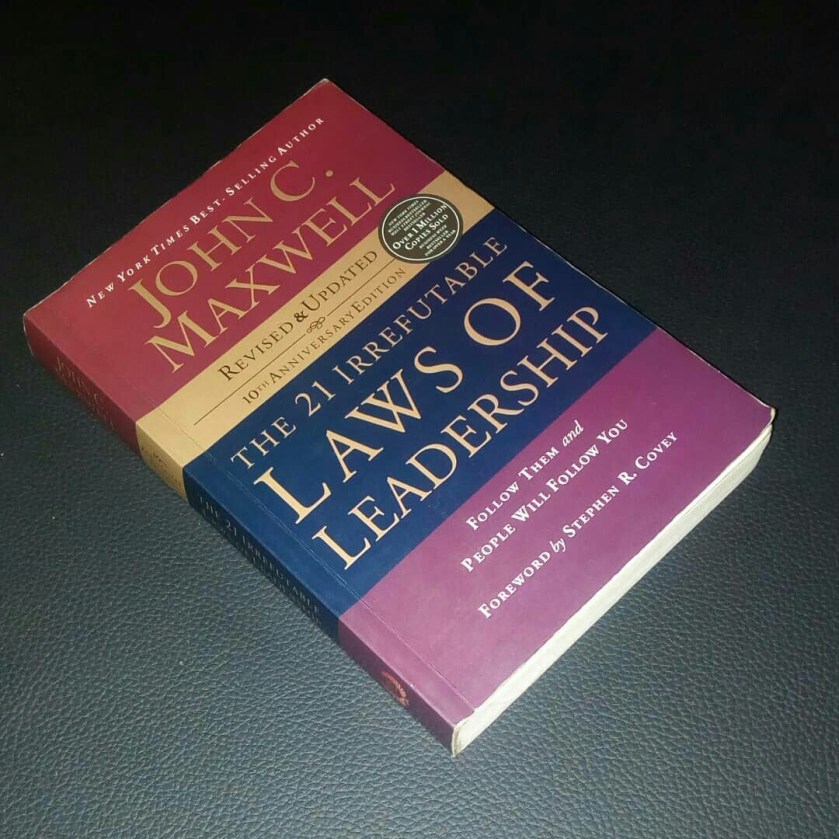
Brave Review: The 21 Irrefutable Laws Of Leadership

Leadership can be a very dicey path and can sometimes be very complex.
With a lot of believe in the many myths and assumptions of leadership.It is certainly clear that this remains an important discuss and area of focus for all people.


John C. Maxwell, a leadership expert, speaker, Coach, Author and Influencer, with over 4 decades of experience in leadership development and growth; he shares some great insight in his book, “The 21 Irrefutable Laws Of Leadership”.


This revised and updated version shows a depth of knowledge from one who has walked the talk, conversed with a wide array and network of diverse leaders across industries globally. Training, coaching, mentoring and grooming many leaders via his books and leadership conferences.


The 21 Irrefutable Laws Of Leadership is a great read, if you’re looking to improve on your leadership competency, impact and success.


The great news is, this book is for all people, not just positional or industry leaders.
Certainly a great recommendation for all who desire to have a great leadership journey and a sustainable and impact full legacy.

Posted in Article, Career, Faith, Strategy, Vision

Article: The Power of Vision!

Vision is the ability to see clearly.
The ability to see beyond the immediate circumstances that surround us to what could be. It is the driving force for anything that would stand the test of time.

It fuels our passions, decisions, thoughts and actions towards the actualization of the things we deeply desire.
Vision is the force behind successful brands.
It keeps the dream alive and propels the dreamer forward in spite of obstacles and challenges.

Without vision, dreams will be lost and dreamers will give up easily at seed time, never pushing through to harvest season to see their visions come alive. Vision fuels the passion and staying power till all is fulfilled.

Vision always precedes structure and content, and the power of vision is strengthened with excellent strategy and consistent execution.

If businesses, brands and people could understand this clearly mapped out principle, then the world would become a much productive and better place.


The Strategy for Vision

Using some Biblical principles and lessons in view of vision, outlined below are some strategies and practical steps.
Principles that can be applied by anyone in the pursuit and accomplishment of their vision, goals and aspirations.


Vision

Why should you work with a strategy when you’ve got a vision?

You should because God is the Ultimate and Grand Master Strategist. His DNA flows through you and you have no choice than to function just as He does.
He set out with a strategy pattern right from the beginning, one we can all learn much from.

Genesis 1:1 says “In the beginning, God created the heavens and the earth.”
Genesis 1:2 says: “The earth was without form and void and darkness was upon the face of the deep.”

What does this mean?
The first statement says heaven and earth were created and then the very next verse says, the earth was without form, it was empty and there was darkness.
Contradictory right? No.

God already saw what He wanted to create right from the beginning.
A complete vision, even though the reality at that moment was emptiness, darkness and the existence of nothing.

Lesson 1:

You’ve got to see the end from the beginning.

Your dreams and aspirations have to be a concluded matter in the eye of your mind.
Many times, when we have big aspirations, the reality around may look like nothing could happen, but once you are able to see and have clarity of Vision, you’ve completed the first phase of your strategy.


Structure

Between Genesis 1: 1-18, we see God get busy with putting things in place be speaking and calling forth things to ensure that there was structure in place.

Lesson 2:

Vision without structure would only make a mess.

Many people, nations and economies could learn from this.
Without proper structures in place, one would end up putting right things in wrong places.
So structure for all things is a very critical next step.

Sometimes, you may not have any resources to put structures in place, but as God’s child, you have His DNA and He is your ultimate resource. In fact, He is resource Himself.

So you speak things into existence, just like your Father in Heaven did at creation. Not just positive declarations or affirmations, but declarations of His promises from His word, the Bible.

As you speak these words, you begin to believe them and it encourages you when faced with obstacles.

Faith or a firm believe comes by hearing and hearing the Word of God. So you have to hear and constantly remind yourself of the truth of God’s Word about you and your future. This propels you to take actions that move you forward.

So make moves in faith, take steps.

This is important because God blesses the work of your hands and not just your words or dreams or desires.
Remember, faith without works is dead. So, make moves to put structures in place about whatever vision or dream you have in mind.

Now, “Structure” can mean different things to different people.
To one it could mean “Finance”, to another “Training” and yet to another “Skill acquisition”.

It could also mean a variety of things like getting “An Education”, “Become an Expert”, “Securing a Physical building”, “Documentations”, “Creating a website”, “Creating an Online Presence” etc.

The bottom line is, you have to be able to identify the structures you need to put in place, structures that would make what you’ve envisioned work smoothly eventually.

Order is critical to the success of any vision and without the right structures in place, trying to accomplish any vision or a goal can easily turn a great dream into something very chaotic with lots of regrets.


Content

Next, from Genesis 1:20-27, we see God begin to fix in the creatures he made into the various structures He had put in place. That’s called CONTENT.
He first created the resources and structures required for their survival, before bringing them in.

Lesson 3:

Vision and structure always precedes content.

So, how does this relate to you?

Well, as you go through your life’s journey, God will place dreams and aspirations in your heart for various purposes and industries.
You’ve got to see it first and believe it. Then work towards making it a reality, putting structures and resources in place first.

For without structures, those you bring aboard your vision could become confused about where you are headed as their leader, or what is expected of them in terms of roles and responsibilities that would help move the vision forward.
So, do things differently.

The above are strategies and life principles, that are applicable to individuals and corporations.
One provided by the Creator Himself, proven over and over again to always work and produce results.

So, what are you waiting for? It’s time for some strategies!


Getting Practical with a Strategic Plan.

Taking into consideration the principle above of VISION, STRUCTURE and CONTENT.
We are sure you’ve realized that for any vision that would stand the test of time with a strong legacy, requires much depth, structures, resources and input from others or a team for success in the long run.

Every vision takes time before it becomes a true picture of itself, but the important thing is to be able to plan efficiently and pace yourself for the long haul.

This implies having a “Strategic Plan” for specific periods that must be evaluated from time to time.

A simple strategic plan should contain the following:

1. Your Vision Statement

This refers to your overall vision as a carefully articulated statement.

An example could be:
“To become Africa’s Leading Pediatric Consultant with a chain of state-of-the-art medical facilities across the African continent, offering prompt and excellent medical services to children.”

The point is, you need to identify the big picture and try to articulate this clearly as a vision statement.


2. Your Action Plan

This should be broken into short-term goals (6 months, a year) or long-term goals (5 years, 15 years or more).
Irrespective of which you choose, your action plan should capture action steps that will help in the actualization of your vision for that period of time.

Still in line with the example above, a short-term action plan for a year under a career category could be to:

“Get into Medical School” and some action steps for this particular goal could include:

*Study for 2 hours daily after each class.
*Ace all courses, especially science courses.
*Graduate with an excellent result in high school.
*Volunteer with medical related organizations during school breaks to increase my extracurricular activities via Internships and volunteer work experiences.
*Apply to win a college scholarship among the top 10 leading medical colleges in the world etc.


3. Your Key Performance Indicators

Also known as KPI’s. This means you need to identify those things that indicate that you are making good progress towards the accomplishment of the goals for your vision.

Your KPI’s using the example above could include some of the following:

* Studying and understanding better my subjects after each school day.
*Obtain an A grade in all courses especially my science courses.
*Successful internship with a medical nonprofit at the end of my summer break.
* Securing at least 5 medical school scholarship offers at the end of my school year etc.


4. Your Accountability Resources

This means identifying those things or people that will help keep you accountable for accomplishing your goals in view of the vision set.

This could include:
Family members, mentors, teachers, friends and people you can really trust.
It could also mean the use of technology and tools such as your mobile phone for keeping a schedule or setting reminders that help you stay organized and keep you on track daily.

Usually a schedule or tool that helps you identify things you need to do, friends or people that you can partners with in achieving some action step such as “studying daily” etc.

We hope you get the idea, and all of this should ultimately help you make steady progress daily.


Conclusion

Your strategic plan does not have to be detailed to the T, but should only help enhance your productivity in the accomplishment of your goals and overall vision.

It is however important to stay flexible, as sometimes our plans are influenced by external factors, changes and challenges.
In such moments, you must think productively about what can be done to move forward in accomplishing your vision, instead of staying stuck.

As long as you have the vision within your heart and believe in it, your actions, decisions and steps will automatically flow and align towards its accomplishment, until it is done.


The Brave Planner Tool

Now, if putting together a strategic plan would prove to be too much of a task for you, not to worry! We have just the right tool for you, called the “Brave Planner Tool” designed and created by Brave Publicity Ink.

This tool is available at our online store.
It is a ready-made and easy to use tool. It can be customized to help you get more organized in crafting and putting together a compelling and actionable strategy for your vision!


Article by Opeolu Adeyemi.
Corporate Communications and Public Relations Consultant
Founder, Brave Publicity Ink!


Posted in Career, Finance, Money, Review, Self development

Brave Review: The Rules of Wealth.

#BraveReview.
Finance is always a hot button and area of great concern to many individuals and economies.
The standard of living, assets, holiday plans and spending habits are often tied to one’s financial status.

Ever wondered what it would be like to live wealthy with lots of financial freedom?
Yes? Yes.
Then there are guide rules to accomplishing this.
A set of clearly outlined logical and strategic rules that can become your strategy for obtaining the level of wealth you desire.

We absolutely love the “Rule of Wealth” book by Richard Templar, and we think you will too!
In his simple yet clear method of communication, he created a rule book that serves as a financial map for your journey towards wealth acquisition and financial freedom.

With his hilarious, yet serious method of communicating, Richard touches base with some open secrets about, wealth, money and things you should know about finance.
Even though it’s a rule book, the content shared is not considered as the Law when it comes to the perception about money and wealth creation. It is a book designed to equip everyone interested in becoming better and more effective at managing their finances.

The “Rule of Wealth” is just one book out of the many Rule books written by Richard!
The is indeed a very carefully crafted read and we applaud this amazing author!

Posted in Career, Leadership, Review, Self development

Brave Review: The 15 Invaluable Laws of Growth.

#BraveReview.
Being at cross roads in our journey towards purpose, success and legacy can be a hard place to be.

This journey can sometimes be confusing and at other times frustrating, leaving one at the brink of great failure and a potential for huge success; except something is done quickly.

This often leaves one with two choices, “Take on the challenge and grow upward” or “Let fear take control and drift through life without purposeful or intentional progress”.

Unfortunately, only a small fraction of people choose the latter.
John C. Maxwell, the world renown Leadership and Personal Development Coach/Author demystifies the journey of growth in a practical way that helps each reader take steady progressive steps.

He presents his thoughts on personal growth and how one can tap into 15 invaluable laws of growth to become more effective and fulfilled..Each chapter is carefully broken down with practical questions and exercises that ensures that readers are able to identify where they’re at in their growth journey and those steps that must be taken to arrive at their desired growth destination.

The 15 Invaluable Laws of Growth, is a seasoned and well researched personal growth resource and guide, useful to anyone truly interested in intentional and personal growth.

We applaud John C. Maxwell for putting together an incredible resource that equips people with the relevant knowledge to reach their potential.